Lesson 2 · 6 min
Where Modern Money Lives
Lesson notes

Byte switched on his money scanner, expecting the city to glow with mountains of coins and banknotes. Instead he found only a little physical cash. The strongest signals came from secure electronic records inside the banking system.
Money can be a record
Most of the money people use exists as bank deposits. An account balance usually isn't a labelled stack of notes waiting in a private box. It's a record of what the bank owes you — a claim you can use for payments or turn into cash under the account's rules.
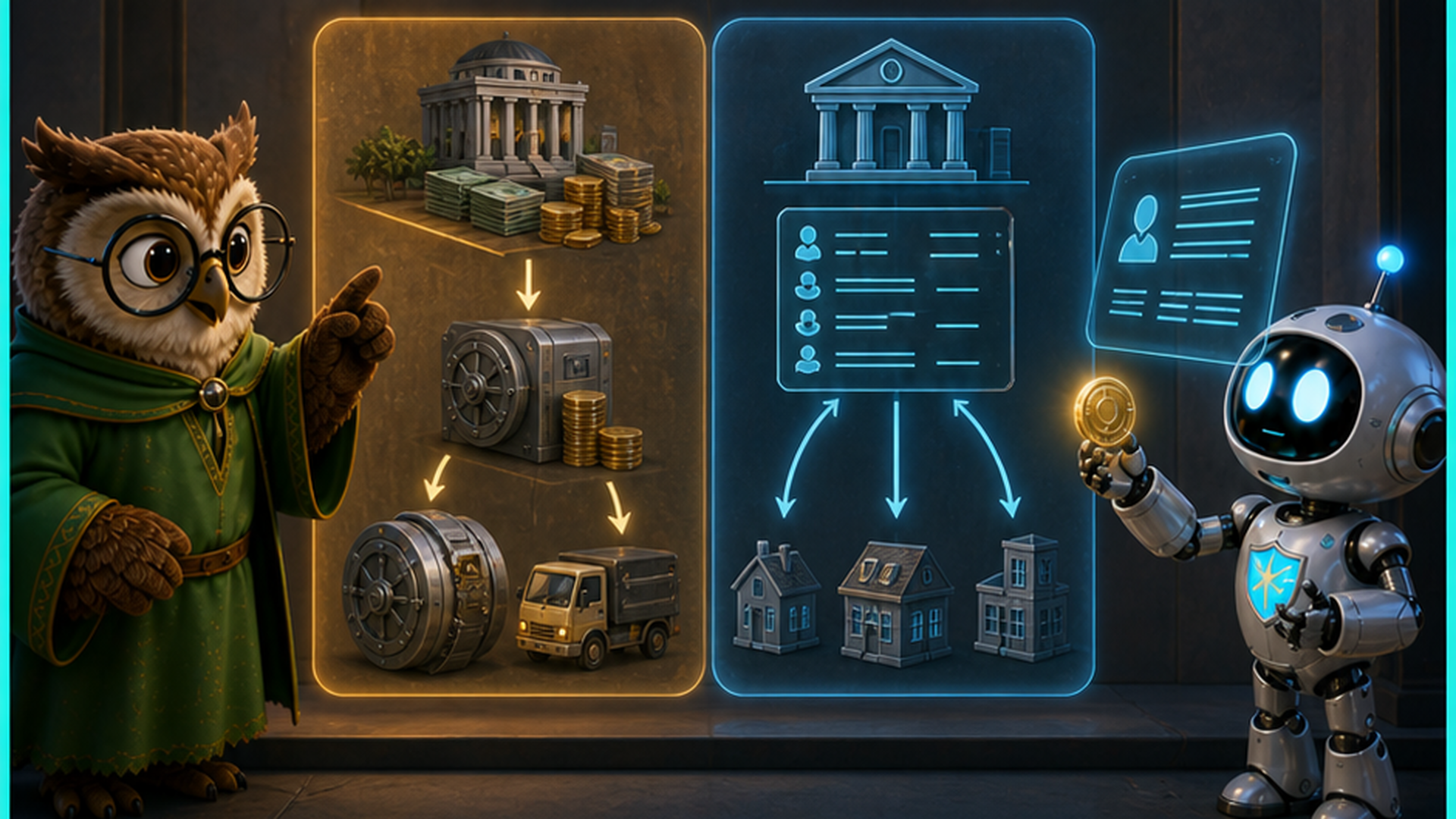
- Cash is physical. When Byte pays with a coin or note, the physical money changes hands directly.
- A bank deposit is different: it's a liability of the bank and an asset for you — the same deposit seen from two sides. People use deposits through transfers, cards and direct debits, and deposits make up most of the money in many modern economies.
These records work because they sit inside a bigger system: contracts, regulation, bank supervision, security, payment networks and public institutions. In some countries, deposit protection may also cover eligible deposits up to legal limits.
How a loan can make new money
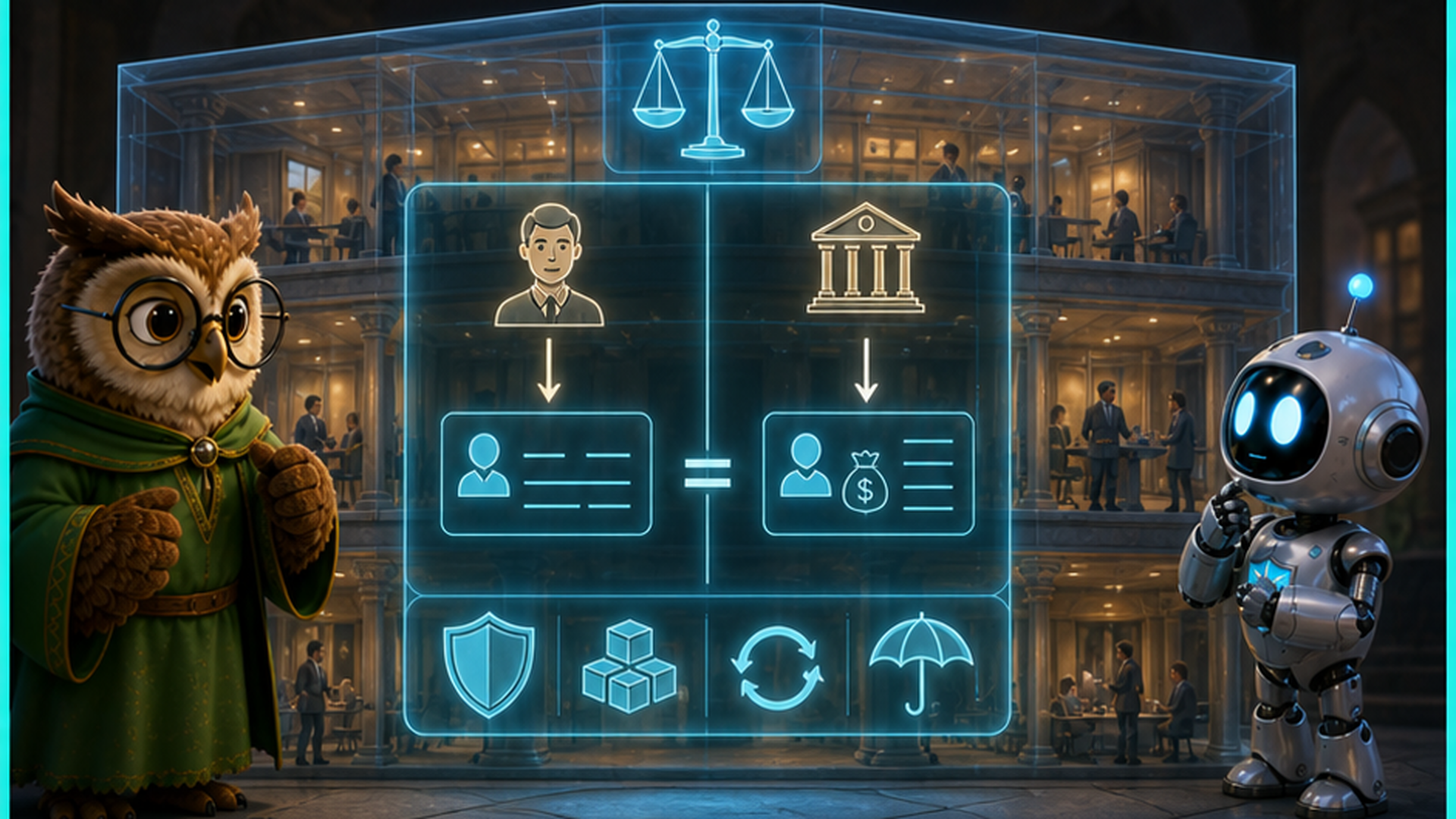
Here's the surprising part. When a bank approves a loan, it can record a new deposit for the borrower — and at the same time record the borrower's debt as something the bank is owed. A new spendable deposit appears… but so does an obligation to repay.
This is not free wealth, and banks can't sensibly lend without limits. They face regulation, capital and liquidity rules, funding costs, and the risk that borrowers don't repay. And when a loan's principal is repaid, that related deposit money is removed again through the accounting.
Modern money isn't only an object. It's also a carefully organised system of records, claims, debts, rules and trust.
🎯 Hero mission: Sort five cards into cash, bank deposit, limited-purpose value, or just an asset: a banknote, an account balance, a shop gift card, game credits, and a bicycle. Explain one real difference between the banknote and the account balance.
Education only — general ideas, not personal financial advice. Real monetary systems differ by country; the euro area is used only as an example.
Quick quiz
Answer a few questions to lock it in.
Is the money in a bank account normally a private pile of your own notes?