Lesson 1 · 6 min
Why Money Exists
Lesson notes
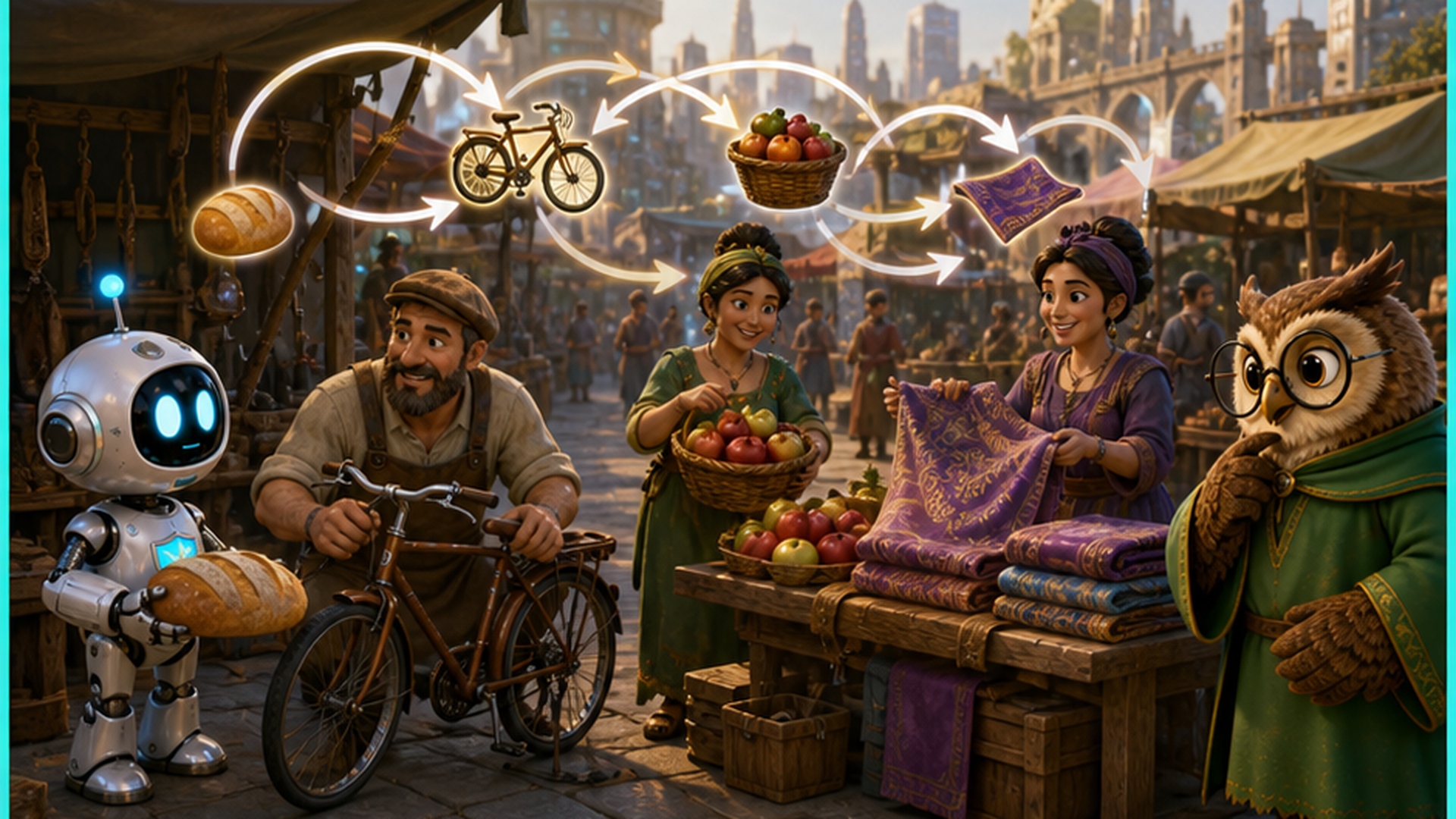
Byte had fresh bread and needed his bicycle repaired. But the repairer didn't want bread — he wanted fruit. And the fruit seller didn't want bread either; she wanted cloth. Byte owned something valuable, yet still couldn't make the trade he needed.
The problem with swapping
In direct barter, each side must want exactly what the other offers — in the right amount, at the right time. Economists call this the double coincidence of wants. It can work in a small group, but as a community grows, finding the perfect match gets harder and harder.
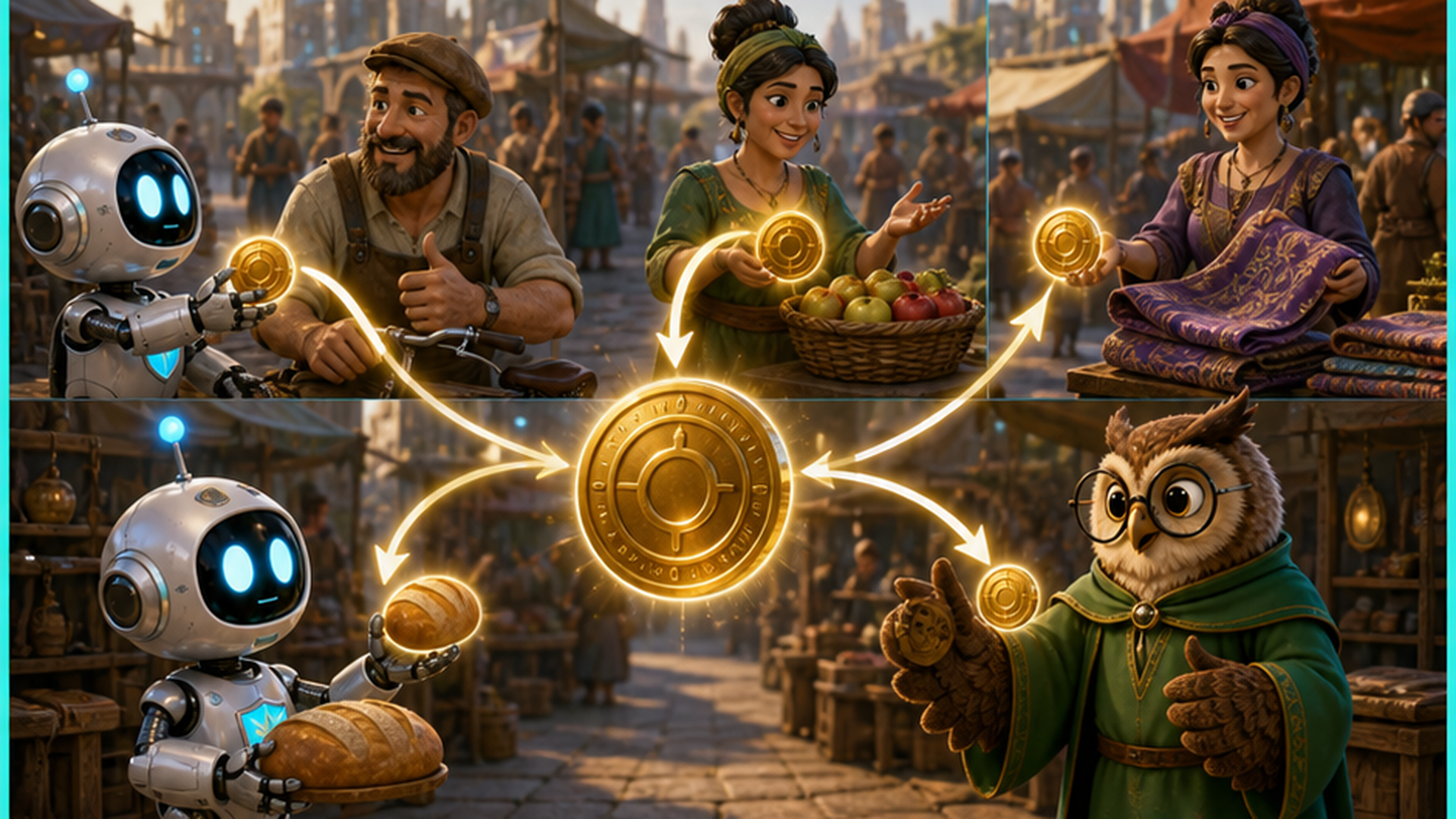
So the traders agreed to accept a common token. Byte could swap bread for tokens, then use the tokens for the repair. The repairer could later spend them on fruit. The token built a bridge between trades that didn't happen at the same moment.
Money's three jobs
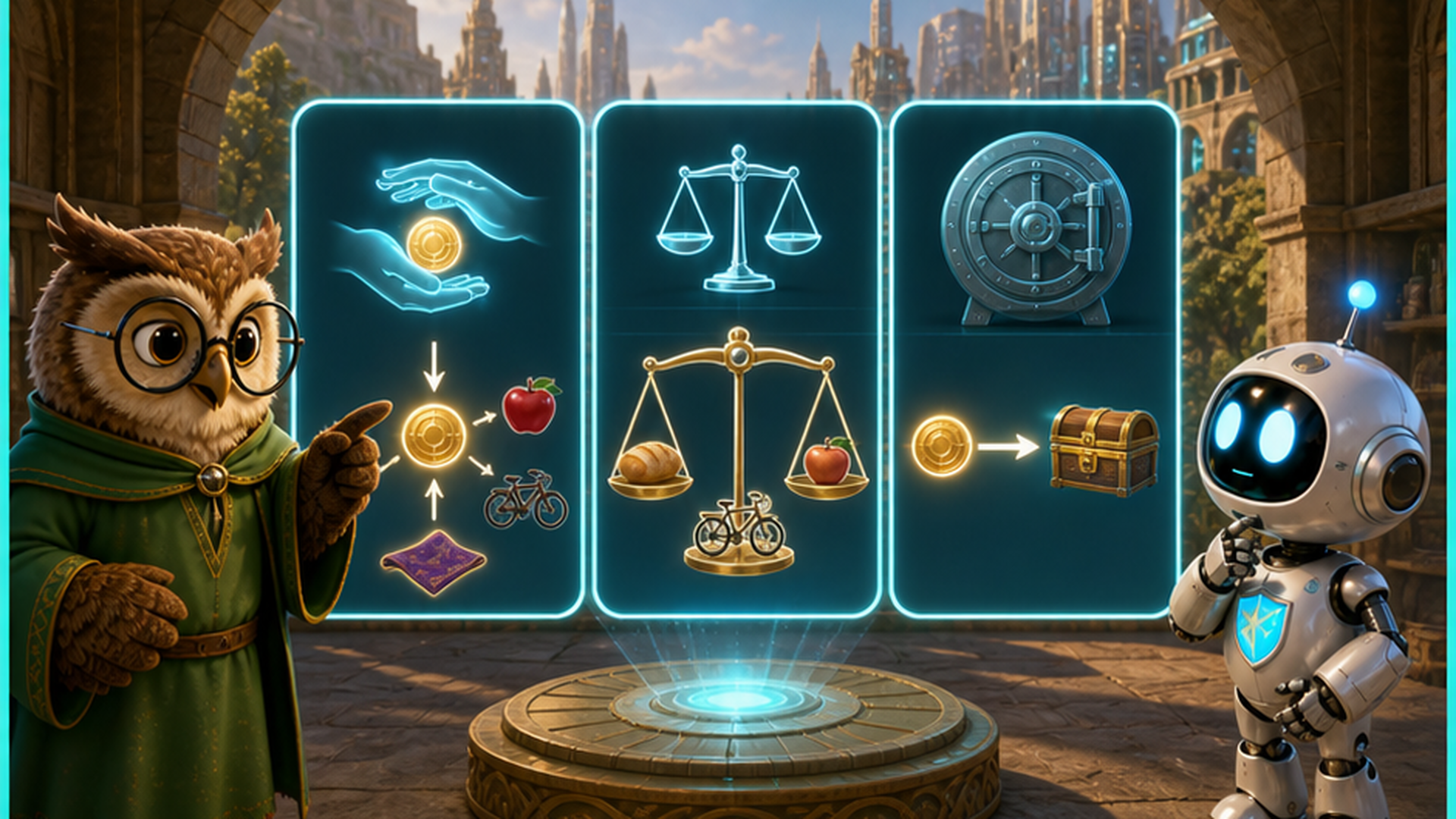
That token is doing what money does. Money has three jobs:
- Medium of exchange — people accept it in payment, so buyers and sellers don't need to want each other's stuff directly.
- Unit of account — a shared measuring language for value, so you can compare the price of bread, fruit and a repair.
- Store of value — you can receive money today and use it later. But "store" doesn't mean "perfectly preserved": if prices rise, the same amount may buy less.
Not everything valuable is money. A painting can hold value, but a shop won't accept one slice of it. A gift card only works in certain places. To act like money, something has to do these three jobs reliably enough that a whole community will use it.
Goldie's rule: Something can be valuable without being useful as money.
🎯 Hero mission: Pick three pretend objects — a snack voucher, a bicycle, and a widely accepted coin. Test each against the three jobs of money. Which behaves most like money, and why?
Education only — this teaches general ideas, not personal financial advice.
Quick quiz
Answer a few questions to lock it in.
Why can barter become difficult?